As we move through 2026, the global economic landscape is being reshaped by a force that many hoped would remain a relic of the past: large-scale geopolitical conflict. While the early 2020s were defined by a pandemic-induced slowdown and subsequent recovery, the current year is defined by the “War Economy.” The intersection of advanced technology, resource scarcity, and territorial disputes has created an economic environment that is both volatile and transformative.
For businesses, investors, and everyday citizens, understanding the economics of 2026 requires a shift in perspective. We are no longer operating in a world of seamless global trade. Instead, we are witnessing the rise of fragmented markets, “friend-shoring,” and the prioritization of national security over cost-efficiency.
The Era of Fragmented Globalization
The most significant economic shift in 2026 is the end of globalization as we once knew it. The conflicts currently unfolding have forced nations to choose sides, leading to the creation of distinct economic blocs. This “de-risking” strategy has replaced the “just-in-time” supply chain model with a “just-in-case” philosophy.
Countries are increasingly moving their manufacturing bases to allied nations—a process known as friend-shoring. While this increases geopolitical stability for those involved, it comes with a high price tag. The efficiency gains of the last thirty years, driven by low-cost labor in far-off regions, are being reversed. As a result, structural inflation has become a persistent challenge in 2026, as the cost of production rises to accommodate safer, more localized supply chains.
Energy as a Strategic Currency
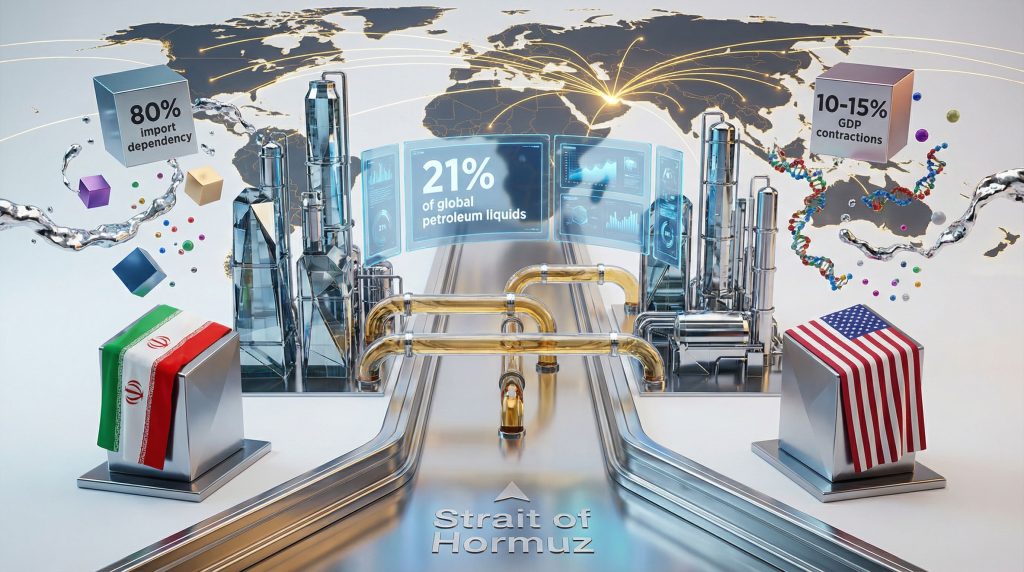
In 2026, energy is not just a commodity; it is the primary weapon of economic warfare. The ongoing conflicts have disrupted traditional oil and gas flows, leading to a permanent state of tension in the energy markets. However, this has inadvertently accelerated the transition to renewable energy in many regions.
Nations that were previously dependent on hostile neighbors for fossil fuels are now investing record amounts into domestic nuclear, solar, and wind infrastructure. The economic struggle of 2026 is, in many ways, a race for energy independence. Those who can power their industries without external reliance are the ones seeing the most stable currency valuations. Conversely, nations stuck in the transition phase are grappling with high utility costs that act as a “tax” on both industrial output and household consumption.
The Rise of the Defense-Industrial Complex
One of the most visible aspects of the 2026 economy is the massive expansion of the defense sector. After decades of stagnant military spending in many parts of the world, budgets are soaring. This “weaponized Keynesianism” is driving growth in specific sectors, particularly in aerospace, cybersecurity, and advanced materials.
However, this growth comes at an opportunity cost. Capital that would have been invested in education, healthcare, or civil infrastructure is now being diverted to the production of munitions and defense systems. While the defense industry acts as a stimulus for high-tech manufacturing, it creates a lopsided economy. The challenge for 2026 is ensuring that this military-led growth does not stifle innovation in the consumer and civilian sectors.
Technological Warfare and the Chip Supremacy
Modern war in 2026 is as much about silicon as it is about steel. The economic struggle centers heavily on the control of semiconductor supply chains. Since advanced weaponry, artificial intelligence, and everyday communications all rely on high-end chips, the regions that control the fabrication plants hold the keys to the global economy.
We are seeing a “Digital Iron Curtain” descend. Trade restrictions on sensitive technologies have become the norm. For the tech industry, this means navigating a labyrinth of export controls and domestic mandates. The struggle for chip supremacy has led to massive government subsidies in the US, Europe, and Asia, as each power tries to build a “fortress” around its technological capabilities.
Food Security and the Inflationary Pressure
Perhaps the most tragic economic consequence of war in 2026 is the impact on global food security. Major agricultural hubs caught in the crossfire have seen their production and export capabilities decimated. This has led to a “Food Protectionism” movement, where countries are banning the export of essential grains and oils to ensure their own populations are fed.
For the global economy, this means that food prices remain at historic highs. In developing nations, this is causing significant social unrest, further complicating the geopolitical picture. In developed economies, high food and energy prices are squeezing the middle class, leading to a “cost-of-living crisis” that dominates political discourse and forces central banks into difficult positions regarding interest rate hikes.
The Digitalization of Finance: CBDCs and Sanctions
The financial world of 2026 is also a battlefield. The traditional SWIFT system, once the undisputed backbone of international payments, is facing competition from alternative systems developed by nations looking to bypass Western-led sanctions.
Central Bank Digital Currencies (CBDCs) are being fast-tracked as tools for both internal control and external trade. In 2026, the ability to freeze assets or cut a nation out of the digital financial loop is a more potent tool than many conventional weapons. This has led to a diversification of reserves away from the dollar and toward gold and other digital assets, creating a more multipolar and less predictable global financial system.
Conclusion
The economics of 2026 are defined by a move away from the ideal of a “flat world” toward one characterized by friction, walls, and strategic competition. War has forced a re-evaluation of what constitutes economic value, placing a premium on resilience, energy security, and technological sovereignty over pure profit.
While the “War Economy” provides a stimulus to certain high-tech industries, the overall cost of conflict is felt in every grocery aisle and every energy bill. The struggle for 2026 is not just about who wins on the battlefield, but who can best manage the internal economic pressures of a world at odds with itself. Navigating this era requires adaptability and a clear-eyed understanding that in 2026, economics and geopolitics are no longer two different subjects—they are the same story. Only through strategic foresight and a commitment to domestic stability can nations hope to weather the economic storms generated by a world in conflict.